

When it comes to area rug sizes and shapes, the details & different options can oftentimes be overlooked. There are now many shapes available other than rectangles, but many people do not think of these alternative shapes when shopping for a rug. Here are some things to take into consideration in order to find the area rug shape that will not only best suit your room, but enhance the look of your overall décor.
Rectangular area rug shapes are the most common, and are a traditional, versatile choice. They can work in almost any room, and can help in making a room appear larger.
Square area rugs, like rectangles, are versatile enough to work in most settings. However, they give a more balanced look because of their symmetry, and can make more of a statement.
Round area rugs are a great solution for rooms of an unusual shape. They also work well with round dining tables, as long as the rug is large enough that the chairs can be pushed back without landing off the rug’s edge.
Oval area rugs are the pairing between the organic feel of round rugs and rectangular. They work in the same instances where you would use a rectangular rug, but add more interest, and elongate the space they’re put into.
Hexagon, octagon, and free-form shaped area rugs are not very common, but are very unique and eye-catching. They capture attention and create a dramatic effect in foyers, under dining tables, and on stair landings.
Runners are elongated versions of rectangular area rugs, which are perfect for hallways & stairways. They “lead the way” visually, creating a natural path along a set area, & often making spaces appear longer.
We’ve discussed the pros, cons, and appropriate applications of commercial carpet. One other option when considering commercial style carpeting- an option that has skyrocketed in terms of popularity and availability- is carpet tile.
Carpet tiles are exactly what they sound like: smaller squares of carpeting, which are installed by laying them together, like tiles. This type of carpeting allows for creating patterns of infinite customization.
The biggest incentive to utilize carpet tile, rather than broadloom carpeting, is the ease of installation. The flooring can be installed quickly, and can be completed when offices are closed, to avoid business disruption. It can be installed section-by-section, meaning that less moving of furniture is required. And if one section of carpeting eventually gets stained or otherwise flawed, it’s a simple process of removing the affected carpet tiles, and replacing them with new ones- no cutting or measuring required.
Feeling good is what it’s all about, according to recent fashion predictions by Pantone for the Summer of 2009. People will be most attracted to colors that reflect individuality and personality, colors that make people feel good about who they are. Color will be more than just a shade, but the very mood and style we wear to face the world.
Color is the essential ingredient in design and style, the very flavor that brings out the mood of design. Fashion and home furnishings are flavored with color, bringing out emotions and style. Color sets the mood like smell reminds a memory, as suggestive as a dream or the scents of the wind itself.
The Pantone Color Forecast features a string of “isms,” each designed with a personality that’s knows what it wants. Since personality comes in all styles of faces, there’s sure to be something this year that lights up your mood, whatever you are feeling in the moment. Step out on summer with designs that play with your personality. Dance the colors that suit your mood.
In an classical arts style that just seems to find its way naturally into any art opening, Classic-ism is nearly colorless save for a medium stripe of blue that suggests restraint and a polite calming grace. It’s subtle yet stylish, perfect for understating the obvious. Classically intoned, this color is sure to bring tradition into fashion and design.
Striking out more boldly, Today-ism steps into brightness with a proper balance of deep red hues and a somber brown, creating a playful dance to attract the eye. It screams right now, lighting up color with an immediacy that brings out a room.
On the experimental side, Fetish-ism experiments with carnal desire, seducing freedom with deliciousness. It’s boldly suggestive, yet subtly coy, like a wink in the bright lights of the night. It’s perfect for when you are feeling dangerously playful, ready to turn heads that follow you everywhere around the room.
Stepping into a stranger mood, Surreal-ism playfully creates the unexpected in a play of creativity. It plays with your imagination with all the brightness of a jewel, dancing and shimmering like moonlight on the water. It’s imaginatively artistic, yet dreamingly suggestive. Shining like a wine glass in the hues of the moonlight, this color dances creativity in the dreamy lights of the dance floor.
Turning absurdity upside down, Absurd-ism frees color from the binds of conformity and rationality, creating a playful twist on the disproportionate. Bending the rules of color in an innovative twist, it breaks out of boring with a playfulness that laughs at the color brown. It’s the kind of color that’s willing to stand on its head, tell a joke in a library, dance even when there’s no music playing.
Independent-ism strikes out on its own with a boldness that’s unique enough to turn heads. Why look like anyone else when style can be as bold as we can be? It’s the color we wear when we want to be ourselves, sure of who we are. It’s like stepping into a room and knowing what you want.
Female-ism celebrates the woman and everything that makes her beautiful. With medium pastels, it celebrates the female being with positivity, a dash of medium color with just a touch of retro glamor hues.
Each of these colors suggest a personality and a mood, a way of making style our own. Design plays on the emotions, changing like moods with the dress, the drapes and the color of the cake. It’s a dance that depends on the playful or the serious, the bold or the subtle. Design and color mean more than just occasion and circumstance, but the very mood and style we wish to step into for the moment.
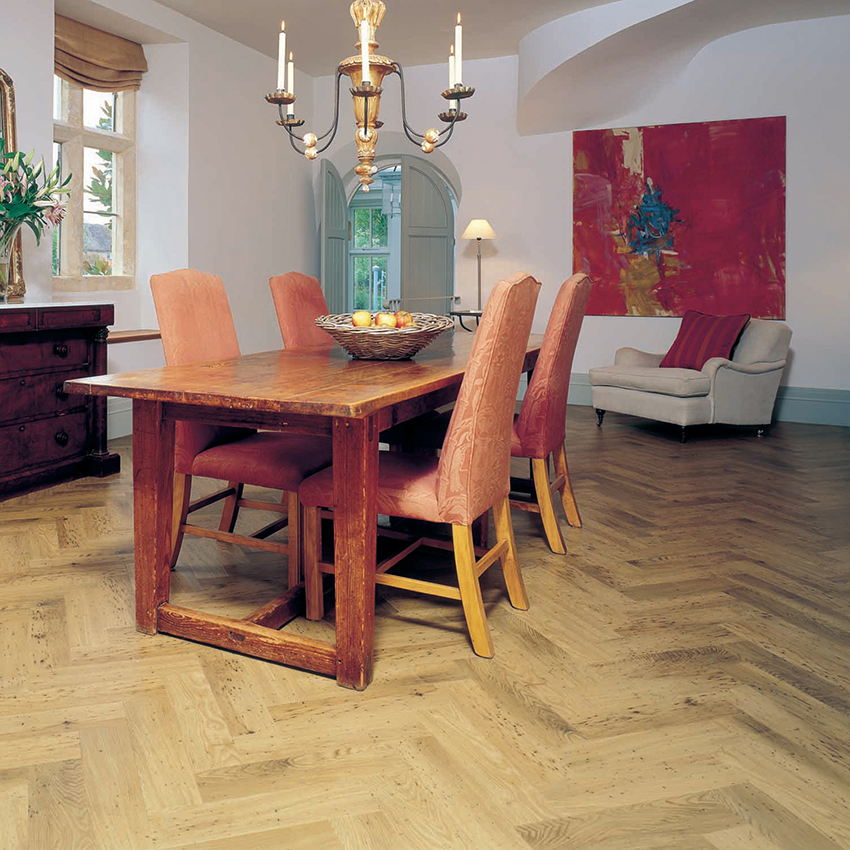
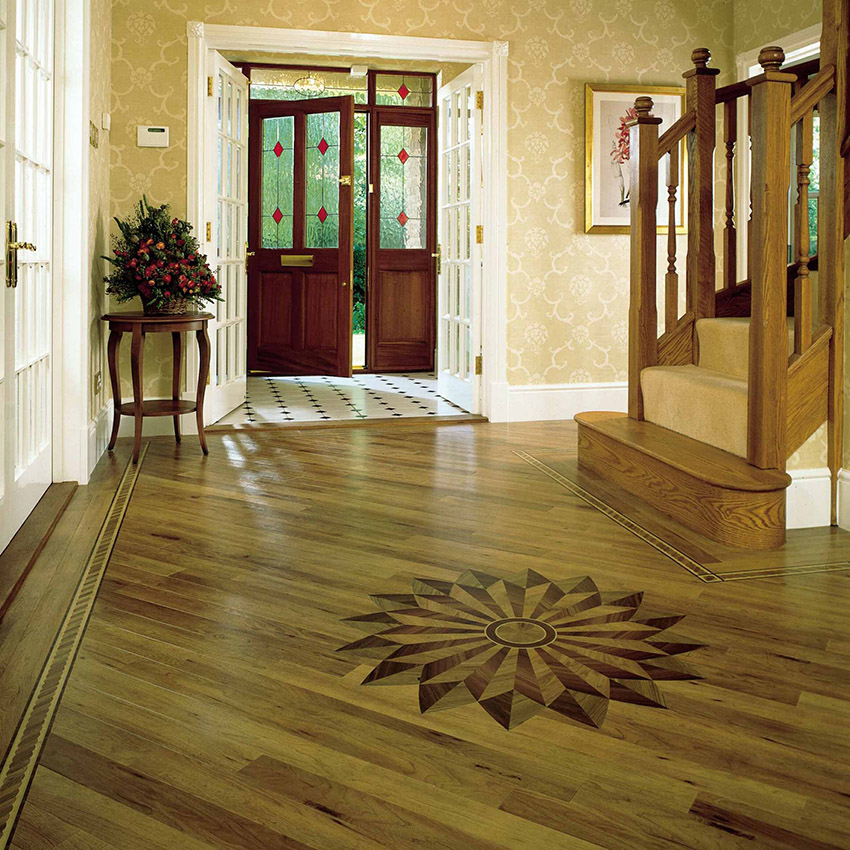
Parquet has a long history, dating back to the magnificent French palaces of the 17th century. But the beautiful geometric patterns, usually quite intricate, have found a place in the finest wide plank flooring and accents of today. Parquet wood flooring is excellent for adding a focal point to a room, or for creating a “room within a room” – a small space outlined with a beautiful, contrasting wood pattern in the floor which divides the space without enclosing it. Parquet provides a particularly lovely contrast when paired with warm and stately reclaimed wood floors.
So, what is parquet? Simply put, parquet is the art of wooden inlays. Parquet is typically very intricate and very elegant, requiring many hours to plan and carve. In the early days, each different parquet piece was hand-carved and assembled to ensure that it would match perfectly. Because the parquet is made entirely from wood there can be no irregularities in fit as there could be in stone floors: if two pieces of parquet are not perfectly sized they will have to be re-made.
In modern use, entire floors are rarely done in parquet. It is far more common to find parquet flooring used as an accent piece, such as a medallion set in the middle of a room and surrounded by wide plank flooring. The elegant, rich tones of the flooring provide a canvas for the parquet, allowing it to stand out and make a beautiful impression. Parquet often coordinates with any wooden furniture in the room, either contrasting with it or highlighting it to really make it pop.
Although parquet wood flooring looks beautiful with any type of wooden floor, many homeowners like to pair it with beautiful and ecologically sensitive reclaimed wood floors. These floors recycle wood from old homes and reuse it, saving trees to protect the environment while providing a lovely classic feel for your home. Parquet inlays fit right in with the rich colors of reclaimed wood and are an excellent finishing touch to any room.
Karastan area rugs have a simple theory behind them: the old patterns of beautiful rugs from days gone by are still beautiful, and still add sophistication to homes now just as they did in ancient times. The Karastan company conducts extensive research into traditional rug patterns from all of antiquity, ranging from weaving patterns seen on cave drawings to samples preserved in museums.
Of course, Karastan also considers the patterns found on rugs made in India, China, and throughout the world. Many tribes still practice their traditional weaving patterns, creating breathtaking works of art. Those rugs are then made into contemporary area rugs by Karastan to bring that touch of traditional beauty into your home.
Karastan has been making quality area rugs since 1928, when Marshall Field noted that the loom technology of the day had come to rival expensive, handmade rugs in quality and design. He founded Karastan area rugs, which came to be the standard known throughout the industry. Karastan rugs come in a variety of colors and designs, but they are far more durable than their hand-woven counterparts. While most contemporary area rugs need to be hand-cleaned and rarely recover if something is spilled on them, Karastan rugs can be cleaned so easily and with such good results that industry experts are amazed.
In 1933, Karastan set up a rug at the World’s Fair in Chicago. But they didn’t just let people see the rug. They invited every single person at the Fair to walk over it. By the time the rug was taken up, more than 5 million people had left their mark on the rug. Covered with every type of filth from food stains to dust to wear and tear, the rug was almost unrecognizable. Karastan then did a test: they washed one side of the rug, while leaving the other side untouched and dirty. When the cleaning was finished, the washed side was as good as new.